
If you've ever clicked a product link in a blog post or YouTube description and the creator earned a commission from your purchase, you've already seen affiliate marketing in action. It's one of the most accessible forms of performance marketing on the internet today — and it's growing fast. The global affiliate marketing industry is projected to surpass $18 billion in 2026, making it a serious revenue channel for both brands and creators.
But what actually happens behind the scenes? How do commissions get tracked? And how do you get started without wasting months on the wrong approach?
This guide breaks it all down.
How Affiliate Marketing Actually Works
At its core, affiliate marketing is a revenue-sharing model. A business rewards an external partner (the affiliate) for generating traffic or sales through that partner's own marketing efforts.
Here's the simplified chain:
- A merchant (also called an advertiser or brand) creates a product or service.
- An affiliate (also called a publisher or partner) promotes that product using a unique referral link.
- A consumer clicks the link, and if they complete a desired action — usually a purchase — the affiliate earns a commission.
- An affiliate network or affiliate platform often sits in the middle, handling tracking, reporting, and payments.
The reason this model works so well is alignment of incentives. The merchant only pays when results happen. The affiliate is motivated to drive genuine conversions, not just impressions. And the consumer discovers products through content they already trust.
The Role of Tracking and Cookies
When someone clicks an affiliate link, a small tracking cookie is stored in their browser. This cookie tells the merchant's system which affiliate referred the visitor. Cookie durations vary — Amazon Associates gives you a 24-hour window, while some affiliate marketing programs offer 30, 60, or even 90-day cookies.
This is why cookie duration matters enormously when choosing programs. A longer window means more time for the consumer to come back and complete the purchase — and you still get credit.
Commission Models Explained
Not all affiliate deals pay the same way. The three most common models are:
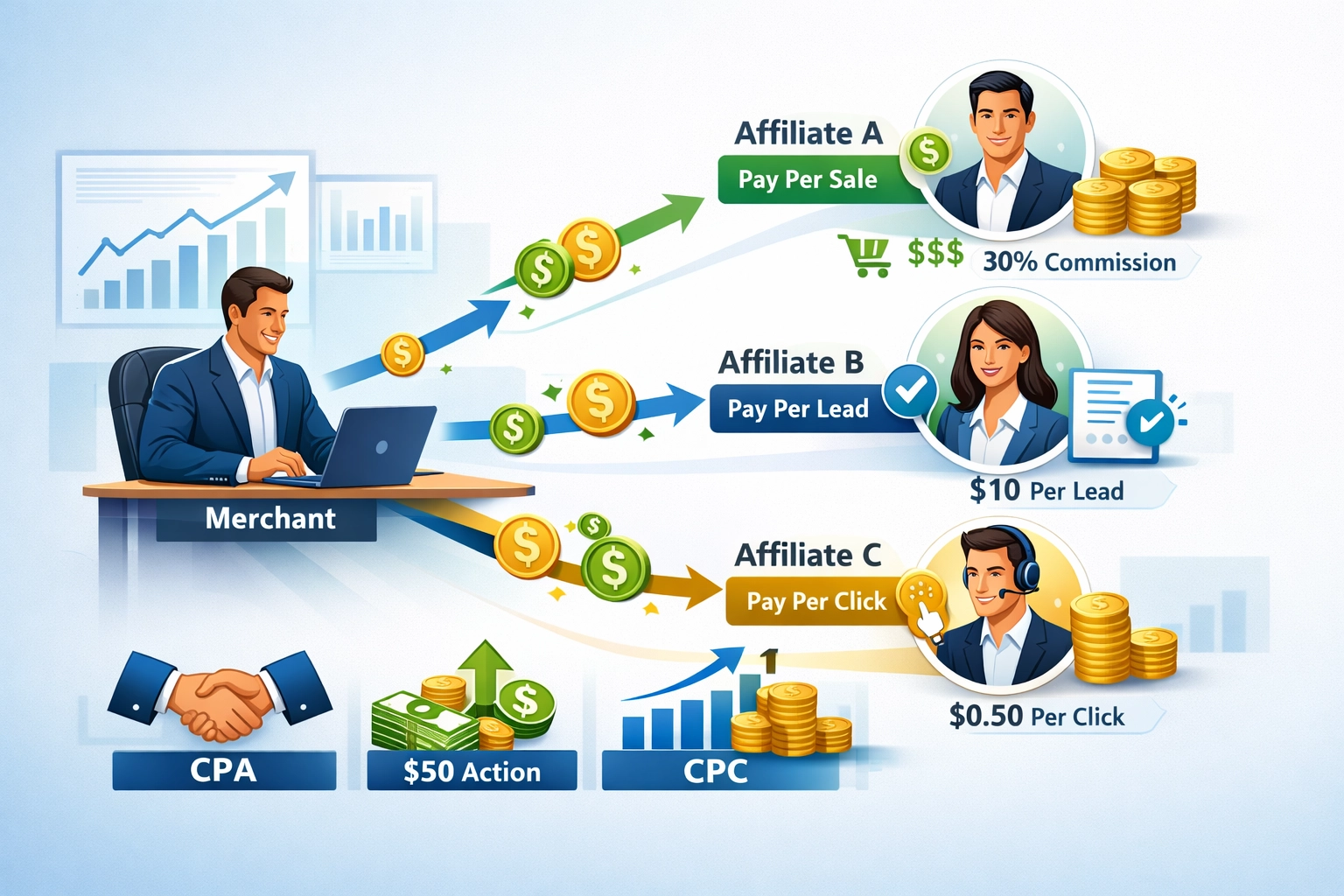
- Pay-per-sale (PPS): You earn a percentage of each completed sale. This is the most common structure.
- Pay-per-lead (PPL): You earn when a referred visitor completes a specific action like signing up for a free trial or filling out a form. Common in SaaS and finance niches.
- Pay-per-click (PPC): You earn based on the traffic you send, regardless of conversion. This is rarer and typically pays less.
Understanding which model fits your audience is a strategic decision, not just a technical one.
Why Affiliate Marketing Has Become So Popular
Several forces are driving the growth of affiliate marketing as a digital marketing strategy.
First, the barrier to entry is remarkably low. You don't need to create a product, manage inventory, or handle customer support. You need an audience — or the ability to build one — and relevant content.
Second, brands love it because it's performance-based. Unlike display advertising, where you pay for impressions that may or may not convert, affiliate partnerships tie cost directly to results. This makes it one of the most efficient customer acquisition channels available.
Third, consumers increasingly trust peer recommendations over brand advertising. A well-written product review on an affiliate marketing website carries more weight than a banner ad. This trust-driven dynamic benefits everyone in the chain.
How It Compares to Other Marketing Channels
Affiliate marketing sits in a unique spot compared to influencer marketing, paid ads, or organic SEO. Influencer deals often involve flat fees regardless of performance. Paid ads require upfront capital and ongoing optimization. Affiliate marketing combines the trust element of influencer content with the accountability of paid channels — without the upfront cost to the merchant.
Key Players in the Affiliate Marketing Ecosystem
To understand the ecosystem, you need to know who's involved and how they relate to each other.
Merchants and Advertisers
These are the companies selling products or services — from massive retailers like Amazon to SaaS companies like HubSpot or Shopify. They create affiliate marketing programs to incentivize external promotion.
Some merchants run their programs in-house using dedicated software. Others use third-party platforms to manage the entire process.
Affiliates and Publishers
Affiliates are the marketers. They can be bloggers, YouTubers, email marketers, comparison site owners, coupon aggregators, or even social media creators on Instagram and TikTok.
The most successful affiliates build an affiliate marketing website around a specific niche — personal finance, tech reviews, outdoor gear, health supplements — and produce content that naturally integrates product recommendations.
Affiliate Networks and Platforms
An affiliate network acts as an intermediary that connects merchants with affiliates. Networks like CJ Affiliate, ShareASale, Rakuten Advertising, and ClickBank maintain large directories of programs, handle tracking through unique links and cookies, and manage payment disbursement.
An affiliate platform, by contrast, is typically software a merchant uses to run its own program directly. Impact, PartnerStack, and Refersion are examples. The distinction matters because networks aggregate many merchants in one place (convenient for affiliates), while platforms give merchants more direct control over their partnerships.
The Consumer
Often overlooked in these discussions, the consumer is the person whose purchase triggers the entire chain. Ethical affiliate marketing prioritizes the consumer's experience — recommending products that genuinely solve a problem, with transparent disclosure that affiliate links are being used.
The Federal Trade Commission (FTC) requires affiliates to disclose their financial relationships with brands. This isn't just a legal requirement — it builds trust.
How to Start With Affiliate Marketing Step by Step
Getting started isn't complicated, but doing it well requires a thoughtful approach.
Choose a Niche You Can Commit To
The biggest mistake beginners make is going broad. "I'll review everything on Amazon" is not a strategy. Pick a niche where you have genuine interest or expertise, where products have reasonable price points (commissions on $5 items add up slowly), and where there's search demand you can realistically compete for.
Use tools like Google Analytics, Ahrefs, or SEMrush to validate that people are actually searching for the topics you plan to cover.
Build Your Affiliate Marketing Website
Your website is your home base. WordPress remains the most popular CMS for affiliates because of its flexibility, plugin ecosystem, and SEO-friendliness.
Focus on three things early:
- Content quality — helpful, in-depth articles that answer specific questions.
- Site speed and user experience — slow sites lose visitors before they ever click a link.
- SEO fundamentals — proper keyword targeting, internal linking, and technical health.
Don't obsess over design early on. Obsess over whether your content genuinely helps someone make a decision.
Join Relevant Affiliate Marketing Programs
Start with programs that match your niche. Amazon Associates is the most beginner-friendly because of its massive product catalog, but commissions are low (typically 1–4%). As you grow, look for niche-specific programs on networks like ShareASale or CJ Affiliate that offer higher commission rates.
When evaluating an affiliate network or program, pay attention to commission rate, cookie duration, payment terms, and whether the merchant's brand reputation aligns with yours.
Create Content That Converts
The content types that perform best in affiliate marketing include:
- Product reviews — detailed, honest assessments of individual products.
- Comparison posts — "Product A vs. Product B" formats that help readers decide.
- Best-of roundups — "Best Budget Laptops for Students in 2026" style listicles.
- How-to tutorials — instructional content where tools or products are naturally recommended.
Every piece of content should answer a real user question. If you're writing a review, address the specific concerns a buyer at that stage of the funnel actually has.
Drive Traffic Through SEO and Distribution
Organic search traffic is the most valuable long-term channel for affiliate marketers because the intent is already there — someone searching "best running shoes for flat feet" is close to a buying decision.
But don't ignore other channels. Email newsletters, YouTube videos, Pinterest, and even podcast mentions can diversify your traffic sources and reduce dependence on Google algorithm changes.
Common Mistakes That Hurt Affiliate Earnings

Knowing what not to do is just as important as knowing the right approach.
Promoting Products You've Never Used
Audiences can sense inauthenticity. If every product on your site gets a glowing review, readers stop trusting you. The affiliates who build lasting businesses are the ones willing to say "this product isn't great, and here's why."
Ignoring FTC Disclosure Requirements
Every page with affiliate links needs a clear, conspicuous disclosure. Burying it in the footer doesn't count. Place it near the top of your content. Beyond legal compliance, transparency actually increases conversions because it builds credibility.
Chasing High Commissions Over Relevance
A crypto trading platform might offer $200 per lead, but if your audience is stay-at-home parents looking for meal planning tools, it's irrelevant. Relevance beats commission rate every time.
Neglecting Content Updates
Product information changes. Prices shift. Models get discontinued. An outdated "Best of 2024" post in 2026 hurts your credibility and your rankings. Schedule regular content audits.
The Future of Affiliate Marketing
The affiliate marketing landscape is evolving in several important directions.
AI-powered content creation is making it easier to produce volume, but harder to stand out. Google's helpful content updates continue to reward firsthand experience and genuine expertise over thin, templated reviews. This means affiliates who invest in original research, real product testing, and unique perspectives will have an increasing advantage.
Voice search and AI assistants are also changing how consumers discover products. Optimizing for conversational queries and being the source that AI models reference is becoming part of a smart affiliate marketing strategy.
Privacy regulations and the phasing out of third-party cookies are pushing affiliate platforms toward first-party tracking solutions and server-to-server attribution. Affiliates who understand these technical shifts will adapt faster than those who don't.
Conclusion
Affiliate marketing is a performance-based model where everyone wins when it's done right — merchants get customers, affiliates earn commissions, and consumers find products through content they trust. The fundamentals haven't changed: pick a niche, build a quality affiliate marketing website, join the right affiliate marketing programs, create content that helps real people, and be patient.
What has changed is the bar for quality. Surface-level content won't cut it anymore. The affiliates thriving in 2026 are the ones who treat this as a real business — investing in relationships with affiliate networks, understanding conversion tracking, and putting the consumer's needs first.
Start small, stay consistent, and let compounding do the work.