Performance marketing is a results-driven approach to advertising where brands pay only when a specific action occurs — a sale, a lead, a click, an app install, or any other measurable outcome. Unlike traditional advertising where you pay upfront for exposure and hope it generates results, performance marketing flips the model: you pay after the result happens.
This distinction matters enormously. A billboard costs the same whether it generates 1,000 customers or zero. A TV commercial costs the same whether it drives revenue or not. Performance marketing eliminates that uncertainty by tying cost directly to outcomes. Every dollar spent is accountable, every result is measurable, and every channel can be optimized based on actual data rather than estimates.
The model has grown rapidly because it aligns the incentives of everyone involved — brands pay for real results, publishers and partners earn for driving those results, and platforms provide the technology to track everything accurately.
Whether you're a brand looking to acquire customers efficiently or a publisher exploring revenue through affiliate marketing programs and paid partnerships, understanding performance marketing is essential for competing in the modern advertising landscape.
This guide covers how performance marketing works, the major channels involved, the pricing models used, and how to build a performance marketing strategy that delivers measurable ROI.
How Performance Marketing Differs From Traditional Advertising
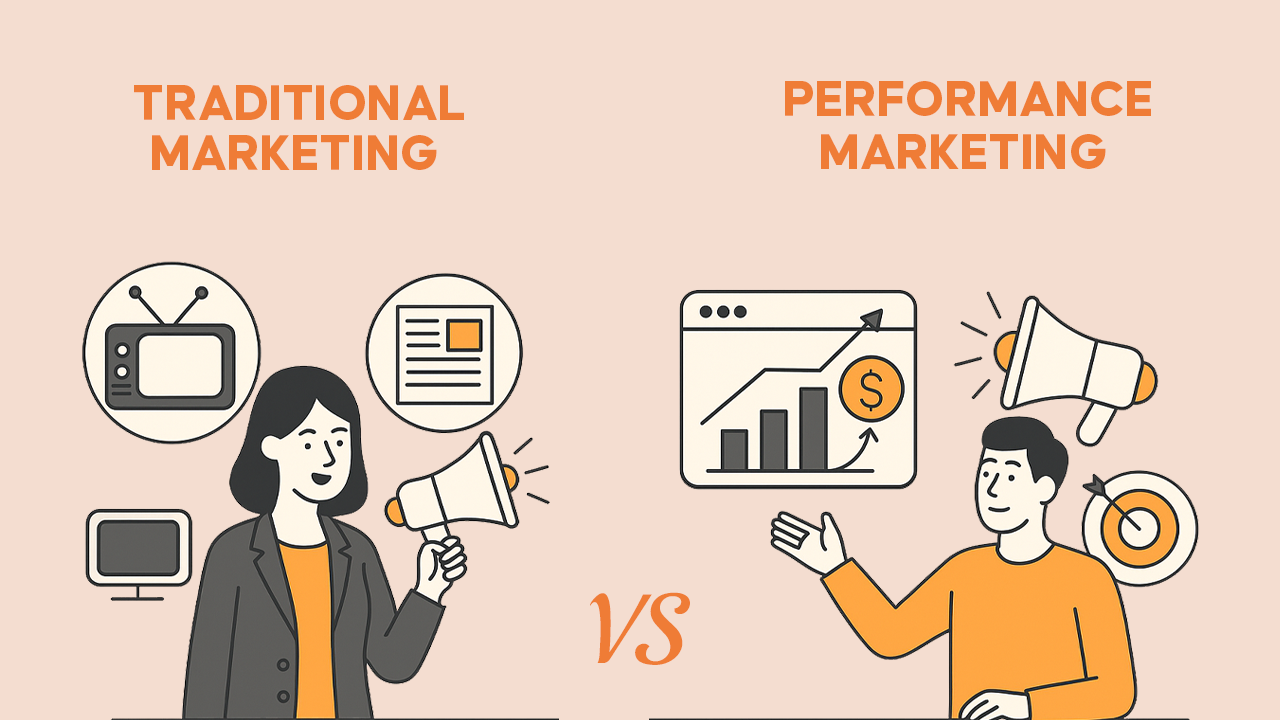
The fundamental shift from traditional to performance marketing changes how budgets are spent, how success is measured, and how campaigns are optimized.
Traditional Advertising: Pay for Exposure
In traditional advertising — TV, radio, print, billboards, and even many digital display campaigns — brands pay for reach. You buy a certain number of impressions, placements, or time slots. Whether those impressions generate customers is uncertain and difficult to measure precisely.
A brand running a TV campaign might spend $500,000 and estimate that it reached 2 million viewers. But how many of those viewers actually purchased? Traditional measurement tools (surveys, brand lift studies, estimated reach) provide approximate answers, not precise ones.
Performance Marketing: Pay for Results
Performance marketing inverts this model entirely. Instead of paying for exposure and hoping for results, you define the result you want and pay only when it happens:
- A sale occurs — you pay the affiliate or publisher a commission.
- A lead is generated — you pay when a form is submitted or a phone call is made.
- A click happens — you pay when someone clicks your ad and visits your site.
- An app is installed — you pay when the download and installation are confirmed.
Every transaction is tracked, attributed, and measured. You know exactly which channel, which partner, and which campaign generated each result. This transparency allows continuous optimization — increasing spend on what works and cutting what doesn't.
Why the Shift Is Accelerating
Several factors drive the growth of performance marketing:
- Accountability pressure — marketing budgets face increasing scrutiny. CFOs and executives demand measurable returns, not vague brand awareness metrics.
- Technology advancement — tracking platforms, attribution tools, and analytics systems make measuring performance across channels increasingly precise.
- Economic efficiency — in uncertain economic environments, paying only for results reduces financial risk compared to large upfront ad commitments.
- Data availability — real-time performance data enables rapid optimization that traditional campaigns simply cannot match.
Major Performance Marketing Channels and How They Work
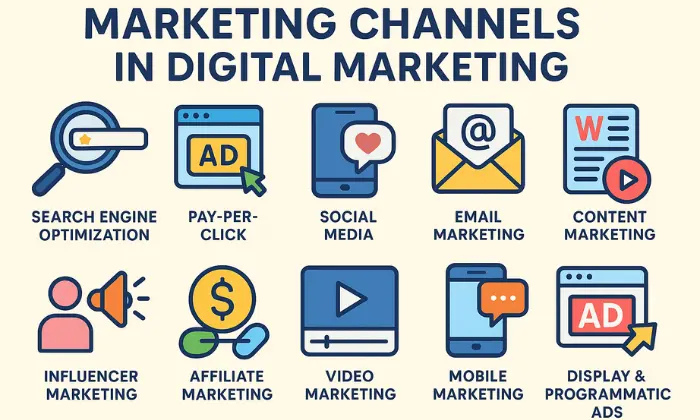
Performance marketing spans multiple channels, each with different strengths, pricing models, and audience characteristics.
Affiliate and Partner Marketing
Affiliate partnerships are one of the oldest and most established performance marketing channels. Brands partner with publishers — bloggers, content creators, comparison sites, coupon platforms, influencers, and email marketers — who promote products to their audiences in exchange for commissions on conversions.
This channel operates on a pure performance basis: the brand pays nothing unless a sale, lead, or specified action occurs. Affiliates bear the cost of creating content and driving traffic, and earn only when their efforts produce results.
Affiliate partnerships are managed through dedicated platforms and networks like Impact, CJ Affiliate, ShareASale, Awin, and Rakuten Advertising. These platforms provide the tracking infrastructure, payment processing, and relationship management that make affiliate partnerships scalable.
For brands, affiliate partnerships provide access to thousands of publishers who reach audiences the brand couldn't reach through its own channels. For publishers, affiliate marketing provides a revenue stream tied directly to the value they create for brands.
Search Engine Marketing (PPC)
Pay-per-click advertising on Google Ads and Microsoft Advertising (Bing Ads) is performance marketing in its most direct form — you bid on keywords, your ad appears when someone searches those terms, and you pay only when someone clicks.
Search PPC targets people with active intent. Someone searching "best project management software" is actively evaluating options. Your ad appears at the exact moment of consideration, and you pay only for the click that brings them to your site.
Key performance metrics for search PPC include cost per click (CPC), click-through rate (CTR), conversion rate, cost per acquisition (CPA), and return on ad spend (ROAS). Every metric is measurable and optimizable in real time.
Paid Social Media Advertising
Facebook Ads (Meta Ads), Instagram Ads, TikTok Ads, LinkedIn Ads, and Pinterest Ads all operate on performance pricing models — you can optimize for clicks, conversions, leads, app installs, or video views and pay based on the outcome you choose.
Social media advertising's strength is audience targeting precision. You can reach people based on demographics, interests, behaviors, job titles, life events, and lookalike audiences modeled on your existing customers. This targeting capability makes social ads particularly effective for B2C brands and products with visual appeal.
Native Advertising
Native ads blend into the content of the platform where they appear — sponsored articles on news sites, recommended content widgets, and in-feed promotional content. Platforms like Taboola and Outbrain distribute native ads across thousands of publisher sites.
Native advertising works as performance marketing when optimized for conversions rather than impressions. The "recommended for you" content blocks you see at the bottom of news articles are native ads, often running on a CPC or CPA basis.
Influencer Performance Partnerships
Traditional influencer marketing pays flat fees regardless of results. Performance-based influencer partnerships tie compensation to measurable outcomes — sales, signups, or traffic generated through the influencer's unique tracking links or promo codes.
This model is growing rapidly because it aligns influencer incentives with brand outcomes. Influencers who genuinely drive results earn more; brands only pay for proven impact.
This convergence of influencer marketing and performance marketing represents one of the most significant shifts in digital marketing — moving from paying for follower counts and engagement metrics to paying for actual business results.
Programmatic Display Advertising
Programmatic advertising uses automated technology to buy and sell display ad inventory in real time through ad exchanges. Advertisers set performance targets (target CPA, target ROAS), and algorithms optimize bidding, placement, and creative delivery to achieve those targets.
While display ads have traditionally been brand awareness tools, programmatic optimization has made them viable as performance channels — particularly for retargeting campaigns that reach users who've previously visited your website.
Performance Marketing Pricing Models Explained
Different campaigns use different pricing models depending on the advertiser's goals and the channel being used.
Cost Per Sale (CPS) / Cost Per Order (CPO)
You pay a percentage or flat fee when a sale is completed. This is the purest performance model because the advertiser only pays when revenue is generated. Most affiliate and e-commerce performance campaigns use CPS.
Example: A fashion brand pays affiliates 12% commission on every sale generated through their tracking links. A $100 order generates a $12 commission.
Cost Per Lead (CPL)
You pay when a qualified lead is generated — a form submission, quote request, free trial signup, or phone call. Common in insurance, finance, education, B2B SaaS, and real estate where the sales cycle is longer and the initial conversion is a lead rather than a purchase.
Example: An insurance company pays $25 for every qualified lead form submitted through an affiliate's content.
Cost Per Click (CPC)
You pay for each click on your ad, regardless of whether the visitor converts. Google Ads and social media platforms primarily use CPC pricing. The advertiser assumes the risk of conversion but gains precise control over traffic generation.
Example: A SaaS company pays $2.50 per click on Google Ads for the keyword "best CRM software."
Cost Per Mille (CPM) / Cost Per Thousand Impressions
You pay per 1,000 ad impressions. While CPM is more common in brand awareness campaigns than pure performance marketing, it's used in programmatic display and video advertising where the goal includes visibility alongside conversions.
Cost Per Install (CPI)
You pay when someone installs your mobile app. This model is standard for mobile app marketing campaigns run through platforms like Google Ads, Facebook Ads, and specialized app marketing networks.
Cost Per Action (CPA)
A broad model where you define the specific action — purchase, signup, download, account verification, first deposit — and pay only when that action is completed. CPA is the most flexible performance pricing model and can be applied across virtually any channel and conversion type.
Key Performance Marketing Metrics You Must Track
Running performance marketing without tracking the right metrics is spending money blindly. These numbers determine whether your campaigns are profitable.
Return on Ad Spend (ROAS)
ROAS measures revenue generated for every dollar spent on advertising. A ROAS of 5:1 means $5 in revenue for every $1 in ad spend. This is the primary profitability metric for e-commerce performance campaigns.
Different channels and products have different ROAS benchmarks. A 3:1 ROAS might be excellent for a low-margin product and terrible for a high-margin subscription service. Context determines whether your ROAS is acceptable.
Customer Acquisition Cost (CAC)
CAC measures the total cost to acquire one new customer — including ad spend, platform fees, agency costs, and any other expenses involved in the campaign. Comparing CAC to customer lifetime value (LTV) determines whether your acquisition strategy is sustainable.
If your CAC is $50 and the average customer generates $200 in lifetime revenue, the economics work. If CAC exceeds LTV, you're losing money on every customer acquired.
Conversion Rate
The percentage of people who complete the desired action after interacting with your campaign. A 3% conversion rate means 3 out of every 100 visitors convert. Optimizing conversion rates — through better landing pages, stronger offers, and more precise targeting — improves profitability without increasing ad spend.
Click-Through Rate (CTR)
The percentage of people who click your ad after seeing it. CTR indicates how relevant and compelling your ad creative and targeting are. Low CTR signals poor ad-to-audience match; high CTR signals strong relevance.
Lifetime Value (LTV)
The total revenue a customer generates over their entire relationship with your business. LTV is critical for performance marketing because it determines how much you can afford to spend acquiring each customer while remaining profitable.
Building a Performance Marketing Strategy From Scratch
A structured approach to performance marketing produces better results than experimenting randomly across channels.
Step 1: Define Clear Goals and KPIs
Determine exactly what outcome you're optimizing for — online sales, lead generation, app installs, phone calls, or subscription signups. Each goal requires different channels, targeting, and measurement frameworks.
Step 2: Select Your Channels Based on Audience and Goal
Match channels to your objectives. Search PPC for high-intent buyers actively looking for your product. Social ads for reaching new audiences based on interests and demographics. Affiliate partnerships for leveraging trusted publishers' audiences. Native ads for content-driven discovery.
Start with one or two channels rather than spreading budget across five simultaneously.
Step 3: Set Up Tracking and Attribution
Before launching any campaign, implement proper conversion tracking. Google Analytics, platform pixels (Meta Pixel, LinkedIn Insight Tag), and affiliate tracking links must all be configured to accurately measure results. Without proper tracking, you can't optimize — and you can't know what's working.
Step 4: Launch With Test Budgets
Start with small budgets to test creative approaches, targeting options, and landing page variations. Let data — not assumptions — guide your scaling decisions. A $500 test across two ad sets generates actionable data within a week.
Step 5: Optimize Based on Data
Performance marketing's greatest advantage is real-time optimization. Review performance daily during initial campaigns. Cut underperforming ads, increase budget on winners, test new creative variations, and refine targeting based on conversion data.
Step 6: Scale What Works
Once you've identified profitable campaigns, channels, and audiences, increase budget gradually. Scale successful campaigns by 20-30% at a time rather than doubling overnight — sudden budget increases can disrupt algorithm optimization and inflate costs.
Common Performance Marketing Mistakes That Waste Budget

Even experienced marketers make errors that reduce campaign profitability.
Optimizing for the Wrong Metric
Optimizing for clicks when your goal is sales creates a disconnect. High click-through rates feel good but don't matter if those clicks don't convert. Always optimize for the metric that's closest to revenue — conversions, ROAS, or CPA rather than impressions or clicks.
Ignoring Attribution Complexity
Most customers interact with multiple touchpoints before converting — they might see a social ad, click a blog post, receive an email, and then search your brand name before purchasing. Last-click attribution gives all credit to the final touchpoint, undervaluing the channels that introduced the customer. Understanding multi-touch attribution prevents you from cutting channels that actually contribute to conversions.
Neglecting Landing Page Optimization
Brilliant ad campaigns that send traffic to poor landing pages waste money. The landing page must match the ad's promise, load quickly, present a clear call to action, and minimize friction. Even a 1% improvement in landing page conversion rate can dramatically improve overall campaign profitability.
Scaling Too Fast Without Validation
Increasing budget before confirming that a campaign is genuinely profitable — not just generating vanity metrics — leads to expensive lessons. Validate profitability at small budgets before committing larger investments.
Not Testing Creative Variations
Running a single ad creative means you'll never know if a different headline, image, or call to action would perform better. Continuous A/B testing of creative elements is fundamental to performance marketing optimization. Committing to an established affiliate network alongside your direct performance campaigns provides access to diverse publisher partnerships and tracking infrastructure that complement your paid media efforts — creating a more resilient, multi-channel performance marketing strategy.
Conclusion
Performance marketing is the model where every dollar spent is tied to a measurable result — a sale, a lead, a click, or an install. It eliminates the guesswork of traditional advertising by making every campaign accountable, every channel optimizable, and every decision data-driven.
The major channels — affiliate partnerships, search PPC, paid social, native advertising, influencer performance deals, and programmatic display — each offer different strengths for different goals and audiences. The pricing models — CPS, CPL, CPC, CPA, CPM, and CPI — provide flexibility to match payment structures to business objectives.
Success requires clear goal definition, proper tracking setup, disciplined testing at small budgets, data-driven optimization, and gradual scaling of what proves profitable. The brands and marketers winning with performance marketing aren't the ones spending the most — they're the ones measuring the best and optimizing the fastest.
Start with one channel, one clear goal, and one set of metrics. Master that before expanding. Performance marketing rewards precision, patience, and continuous improvement — the same principles that drive success in every measurable endeavor.