PPC advertising — pay-per-click — is a digital marketing model where advertisers pay a fee each time someone clicks their ad. Instead of earning traffic organically through SEO, you're buying visits to your website, landing page, or offer.
It's one of the fastest ways to generate targeted traffic online. While SEO can take months to deliver results, a well-structured PPC advertising campaign can drive qualified visitors within hours of launching. Google processes over 8.5 billion searches daily, and the ads appearing above organic results on virtually every commercial search query are PPC ads competing for those clicks.
But PPC isn't just about paying for clicks — it's about paying for the right clicks. Understanding how ad auctions work, how to choose keywords, how to write compelling ad copy, and how to optimize landing pages is what separates profitable campaigns from expensive mistakes.
This guide covers how PPC works, the major platforms, key metrics, and how pay-per-click fits into broader strategies including affiliate marketing and content monetization.
How Pay-Per-Click Advertising Actually Works
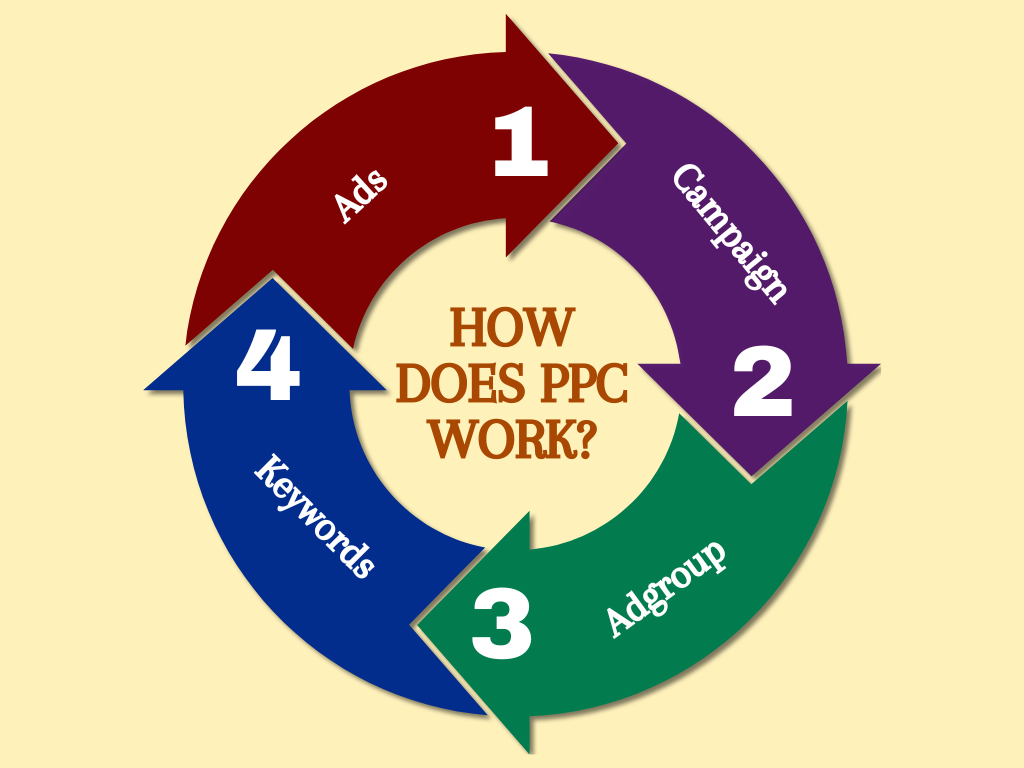
PPC looks simple on the surface — you bid on keywords, your ad shows up, someone clicks, you pay. But the mechanics underneath determine whether your campaign earns money or burns it.
The Ad Auction Process
Every time someone types a search query into Google, an instantaneous auction happens behind the scenes. Google evaluates all advertisers bidding on keywords relevant to that query and decides which ads to show, in what order, and at what price.
The auction considers two primary factors:
- Maximum bid — the highest amount you're willing to pay per click for a specific keyword.
- Quality Score — Google's rating (1–10) of the overall quality of your ad, keywords, and landing page. This includes expected click-through rate, ad relevance to the search query, and landing page experience.
Your Ad Rank — which determines your ad's position — is calculated by multiplying your bid by your Quality Score. This means an advertiser with a lower bid but a higher Quality Score can outrank an advertiser willing to pay more. Google rewards relevance and quality, not just budget.
How Cost Per Click Is Determined
You don't always pay your maximum bid. Google uses a second-price auction model — you pay just enough to beat the advertiser ranked below you. If you bid $5 and the next highest effective bid is $3.20, you might pay $3.21 per click rather than the full $5.
This system incentivizes advertisers to bid their true value rather than lowballing, because underbidding reduces your Ad Rank and lowers your chances of being shown at all.
The Role of Quality Score
Quality Score is arguably the most important concept in PPC advertising because it directly affects both your ad position and your cost per click:
- High Quality Score (7–10) — your ads show in higher positions at lower costs. Google trusts that your ad is relevant and useful to searchers.
- Low Quality Score (1–4) — your ads show in lower positions at higher costs, or may not show at all. Google sees your ad as less relevant than competitors'.
Three factors determine Quality Score: expected click-through rate (how likely users are to click your ad), ad relevance (how closely your ad matches the search intent), and landing page experience (how useful and relevant your landing page is after the click).
Improving Quality Score is the single most effective way to reduce your PPC costs while maintaining or increasing your ad visibility.
Major PPC Platforms and Where to Advertise
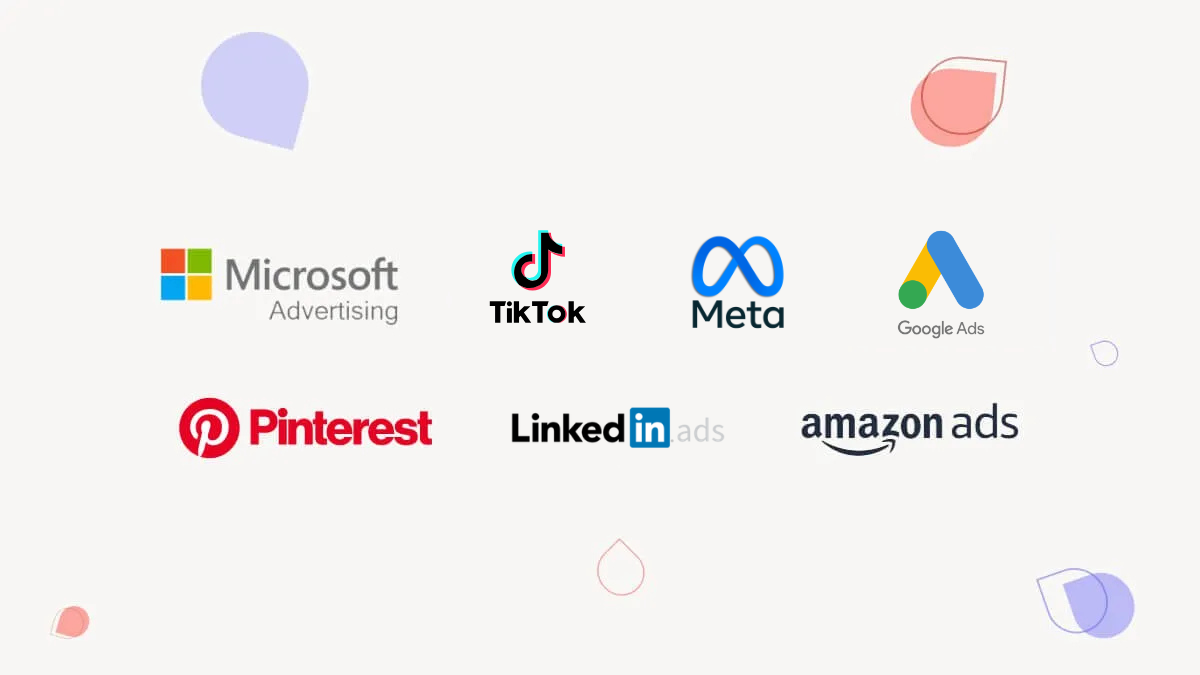
PPC advertising isn't limited to Google. Multiple platforms offer pay-per-click models, each with different audience demographics, ad formats, and strengths.
Google Ads: The Dominant Search Platform
Google Ads is the largest and most widely used PPC platform, commanding over 90% of global search engine market share. It offers several ad formats:
- Search ads — text ads appearing above and below organic results on Google Search. The highest-intent PPC format because users are actively searching for something specific.
- Display ads — visual banner ads shown across Google's Display Network, which reaches over 90% of internet users globally. Better for brand awareness and remarketing than direct response.
- Shopping ads — product listing ads with images, prices, and reviews appearing in Google Shopping results. Essential for e-commerce businesses.
- Video ads — ads shown on YouTube before, during, or alongside videos. YouTube is the world's second-largest search engine.
- Performance Max — automated campaigns that run ads across all Google channels (Search, Display, YouTube, Gmail, Maps, Discover) from a single campaign.
For most businesses starting with PPC, Google Search ads are the logical first step because they target people with active purchase intent.
Microsoft Advertising (Bing Ads)
Microsoft Advertising runs ads on Bing, Yahoo, and partner sites. While Bing's market share is smaller than Google's, it offers advantages that smart advertisers exploit:
- Lower competition — fewer advertisers bidding means lower cost per click for the same keywords.
- Older, higher-income demographic — Bing's user base skews older and wealthier, which benefits advertisers in finance, insurance, healthcare, and luxury goods.
- Easy import — you can import your Google Ads campaigns directly into Microsoft Advertising, making it simple to expand to this platform.
Many experienced PPC marketers run campaigns on both Google and Bing simultaneously, using Bing's lower CPCs to improve overall return on ad spend.
Meta Ads (Facebook and Instagram)
Meta Ads operate on a different PPC model — instead of targeting keywords, you target audiences based on demographics, interests, behaviors, and custom audience lists.
- Facebook Ads — reach users based on interests, age, location, behavior, and lookalike audiences. Strong for both B2C and B2B.
- Instagram Ads — visual-first ads (image, video, Stories, Reels) reaching younger demographics. Powerful for e-commerce, fashion, beauty, and lifestyle brands.
Meta's PPC model charges per click (CPC) or per impression (CPM) depending on your campaign objective. The platform's detailed targeting options make it effective for reaching specific audience segments that search ads might miss.
LinkedIn, TikTok, and Pinterest Ads
- LinkedIn Ads — highest CPC of any social platform, but the most effective for B2B targeting by job title, company, industry, and seniority. Valuable for SaaS, consulting, and professional services.
- TikTok Ads — rapidly growing PPC platform reaching younger demographics. Effective for brand awareness, app installs, and e-commerce promotions.
- Pinterest Ads — visual discovery platform where users actively plan purchases. Strong for home decor, fashion, food, travel, and DIY niches.
Amazon Advertising
For e-commerce sellers, Amazon Advertising is a PPC platform where you bid on keywords to show sponsored product listings within Amazon search results. Since Amazon users have extremely high purchase intent (they're already on a shopping platform), conversion rates are typically higher than Google Search ads for product-focused campaigns.
Key PPC Metrics Every Advertiser Must Track
Running PPC advertising campaigns without tracking the right metrics is like driving without a dashboard. These numbers tell you whether your money is working or wasting.
Click-Through Rate (CTR)
CTR measures the percentage of people who see your ad and click it. It's calculated by dividing clicks by impressions.
A higher CTR signals that your ad copy and targeting are relevant to the search query. Average CTR across Google Search ads is roughly 3–5%, though this varies significantly by industry. A CTR below 2% typically signals that your ad copy, keyword targeting, or audience alignment needs improvement.
CTR also directly influences your Quality Score — higher CTR improves Quality Score, which lowers your cost per click. Improving CTR creates a virtuous cycle of better positions at lower costs.
Cost Per Click (CPC)
CPC is the actual amount you pay for each click. Average CPCs vary enormously depending on industry, keyword competitiveness, and platform. Legal keywords on Google Ads can cost $50–$100+ per click, while e-commerce keywords might cost $0.50–$3.00.
Understanding your average CPC helps you calculate how much traffic your budget can generate and whether the economics of your campaign are sustainable.
Conversion Rate
Conversion rate measures the percentage of ad clicks that result in a desired action — a purchase, form submission, phone call, signup, or download. A campaign with a 5% conversion rate means 5 out of every 100 clicks produce a conversion.
High click-through rates with low conversion rates indicate a problem with your landing page, offer, or audience targeting — people are interested enough to click but not motivated enough to convert.
Return on Ad Spend (ROAS) and Cost Per Acquisition (CPA)
- ROAS — measures revenue generated for every dollar spent on ads. A ROAS of 4:1 means $4 in revenue for every $1 in ad spend.
- CPA — measures the total cost to acquire one customer or conversion. If you spend $500 and generate 10 sales, your CPA is $50.
These are the ultimate profitability metrics. A campaign can have excellent CTR and low CPC but still lose money if the conversions aren't generating enough revenue to justify the ad spend.
How PPC Connects to Affiliate Marketing Strategies
PPC advertising and affiliate marketing intersect in powerful ways — both for affiliates looking to drive paid traffic and for businesses using affiliate partnerships alongside paid campaigns.
Affiliates Using PPC to Drive Paid Traffic
Some affiliates use PPC advertising to drive traffic directly to their affiliate content or landing pages. Instead of waiting months for SEO traffic, they bid on buyer-intent keywords and send paid clicks to product review articles, comparison pages, or pre-sell landing pages containing affiliate network links.
This approach requires careful math. If your average CPC is $1.00, your conversion rate is 3%, and your average affiliate commission is $25, you're spending $33.33 (100 clicks ÷ 3 conversions × $1.00 CPC) to earn $75 (3 conversions × $25 commission) — a profitable campaign.
But the margins are tight. Affiliates running PPC campaigns need to track every metric meticulously and optimize continuously. A small increase in CPC or decrease in conversion rate can flip a profitable campaign into a losing one.
Restrictions on Brand Bidding for Affiliates
Many affiliate programs and affiliate networks restrict affiliates from bidding on brand keywords in PPC campaigns. For example, an affiliate promoting a software product might be prohibited from bidding on the brand name itself in Google Ads.
These restrictions exist because the brand already runs its own paid campaigns on those keywords. Allowing affiliates to bid on the same terms would drive up the brand's own advertising costs while paying unnecessary commissions. Always check the program terms before running PPC campaigns for any affiliate marketing offer.
Businesses Combining PPC and Affiliate Channels
Smart businesses run PPC advertising and affiliate marketing as complementary channels rather than competing ones. PPC captures high-intent search traffic directly, while affiliate partnerships reach audiences through trusted content creators, bloggers, and influencers.
The combination provides both breadth (affiliates reaching diverse audiences across blogs, YouTube, email, and social media) and precision (PPC targeting specific keywords at the exact moment of search intent). Together, they cover more of the customer journey than either channel alone.
Building a Profitable PPC Campaign Step by Step
Setting up a PPC campaign that actually generates positive ROI requires a structured approach, not just throwing keywords into Google Ads and hoping for results.
Step 1: Define Your Campaign Goal
Every campaign needs a clear objective. Are you driving sales, generating leads, building brand awareness, or promoting an app? Your goal determines which platform to use, which ad format to choose, and which metrics to optimize for.
Step 2: Research and Select Keywords
Keyword research is the foundation of search PPC. Tools like Google Keyword Planner, SEMrush, Ahrefs, and SpyFu help you identify keywords with sufficient search volume, manageable competition, and clear buyer intent.
Focus on keywords that signal purchase readiness: "buy," "best," "review," "pricing," "vs," and "[product] alternatives" are strong intent indicators. Avoid broad informational keywords that attract curious browsers rather than potential buyers.
Step 3: Set Your Budget and Bidding Strategy
Start with a daily budget you're comfortable testing with — even $10–$20/day generates meaningful data within a few weeks. Google Ads offers multiple bidding strategies: manual CPC (you set max bids), enhanced CPC (Google adjusts bids slightly), target CPA (Google optimizes for your target cost per conversion), and maximize conversions (Google spends your budget to get the most conversions).
For beginners, manual CPC provides the most control while you learn. As you gather conversion data, automated bidding strategies can optimize performance at scale.
Step 4: Write Compelling Ad Copy
Your ad competes for attention against multiple other ads on the same search results page. Effective ad copy includes your target keyword in the headline, communicates a clear value proposition, includes a strong call to action, and uses ad extensions (sitelinks, callouts, structured snippets) to occupy more space in the results.
Step 5: Optimize Your Landing Page
The landing page — where users arrive after clicking your ad — determines whether clicks become conversions. A high-converting landing page loads fast, matches the promise of the ad copy, has a clear call to action, minimizes distractions, and builds trust through testimonials, reviews, or security signals.
Tools like Unbounce, Google Optimize, or simple A/B testing help you refine landing page performance over time.
Step 6: Launch, Monitor, and Optimize
Launch your campaign, then monitor daily for the first two weeks. Watch for keywords that consume budget without converting (add them as negative keywords), ads with low CTR (test new copy), and landing pages with high bounce rates (improve relevance and speed).
PPC is not set-and-forget. Continuous optimization — adjusting bids, refining keywords, testing ad copy, and improving landing pages — is what separates profitable campaigns from expensive experiments.
Common PPC Mistakes That Waste Budget

Even experienced advertisers make errors that drain ad spend without generating proportional results.
Targeting Too-Broad Keywords
Bidding on broad, generic keywords like "shoes" or "software" attracts massive click volume with low conversion intent. Someone searching "shoes" might be browsing casually. Someone searching "women's waterproof hiking boots size 8" is ready to buy. Specificity saves budget and improves conversion rates.
Ignoring Negative Keywords
Negative keywords prevent your ads from showing on irrelevant searches. Without them, your "running shoes" campaign might show for "how to fix running shoes" or "running shoes free" — searches that will never convert. Regularly reviewing your search terms report and adding negative keywords is one of the simplest ways to improve campaign efficiency.
Sending Traffic to Your Homepage
Your homepage isn't optimized for any specific conversion. PPC traffic should land on dedicated landing pages tailored to the specific ad and keyword that triggered the click. A user searching "best CRM for small business" should land on a page about CRM solutions, not your company's generic homepage.
Not Tracking Conversions Properly
Running PPC campaigns without proper conversion tracking is spending money blindly. Set up conversion tracking through Google Ads, Google Analytics, or your platform's pixel before launching any campaign. Without conversion data, you can't calculate CPA, ROAS, or which keywords actually generate revenue.
Conclusion
PPC advertising is one of the most powerful and immediate traffic generation tools in digital marketing. It puts your offer in front of people at the exact moment they're searching for solutions — and you only pay when someone actually clicks.
Understanding the ad auction system, Quality Score mechanics, and proper campaign structure is what separates profitable PPC from budget waste. Whether you're running Google Ads for your own business, using Meta Ads for e-commerce, or driving paid traffic through affiliate marketing campaigns via an affiliate network, the fundamentals remain the same: target the right intent, write compelling ads, optimize your landing pages, and track every metric that matters.
PPC delivers speed that SEO can't match and precision that most organic channels can't replicate. Combined with content marketing, email, and affiliate partnerships, it becomes one piece of a complete digital marketing strategy that covers every stage of the customer journey.