Most people think of affiliate marketing as sharing product links and earning commissions on online purchases. But there's a lesser-known model that often pays significantly more per conversion — and it doesn't require anyone to click "buy now." It requires them to pick up the phone.
Pay per call affiliate marketing is a performance-based model where affiliates earn commissions for generating qualified phone calls to businesses. Instead of tracking clicks and online purchases, the conversion event is an actual phone call that meets specific criteria — typically a minimum duration like 60, 90, or 120 seconds.
Why does this matter? Because phone calls convert at dramatically higher rates than web forms or online checkouts. When someone calls a business, they're signaling strong intent — they want to talk to a real person, ask questions, and often make a decision on that same call. This high intent is why pay per call affiliate marketing commands some of the highest payouts in the entire affiliate industry.
This guide covers how pay per call works, which industries pay the most, how to generate phone traffic, and how to get started. Many of the top-paying affiliate programs in this space offer commissions that dwarf traditional cost-per-sale models.
How Pay Per Call Works: The Complete Mechanism
Understanding the mechanics behind pay per call helps you approach campaigns strategically rather than guessing at what drives commissions.
The Basic Pay Per Call Flow
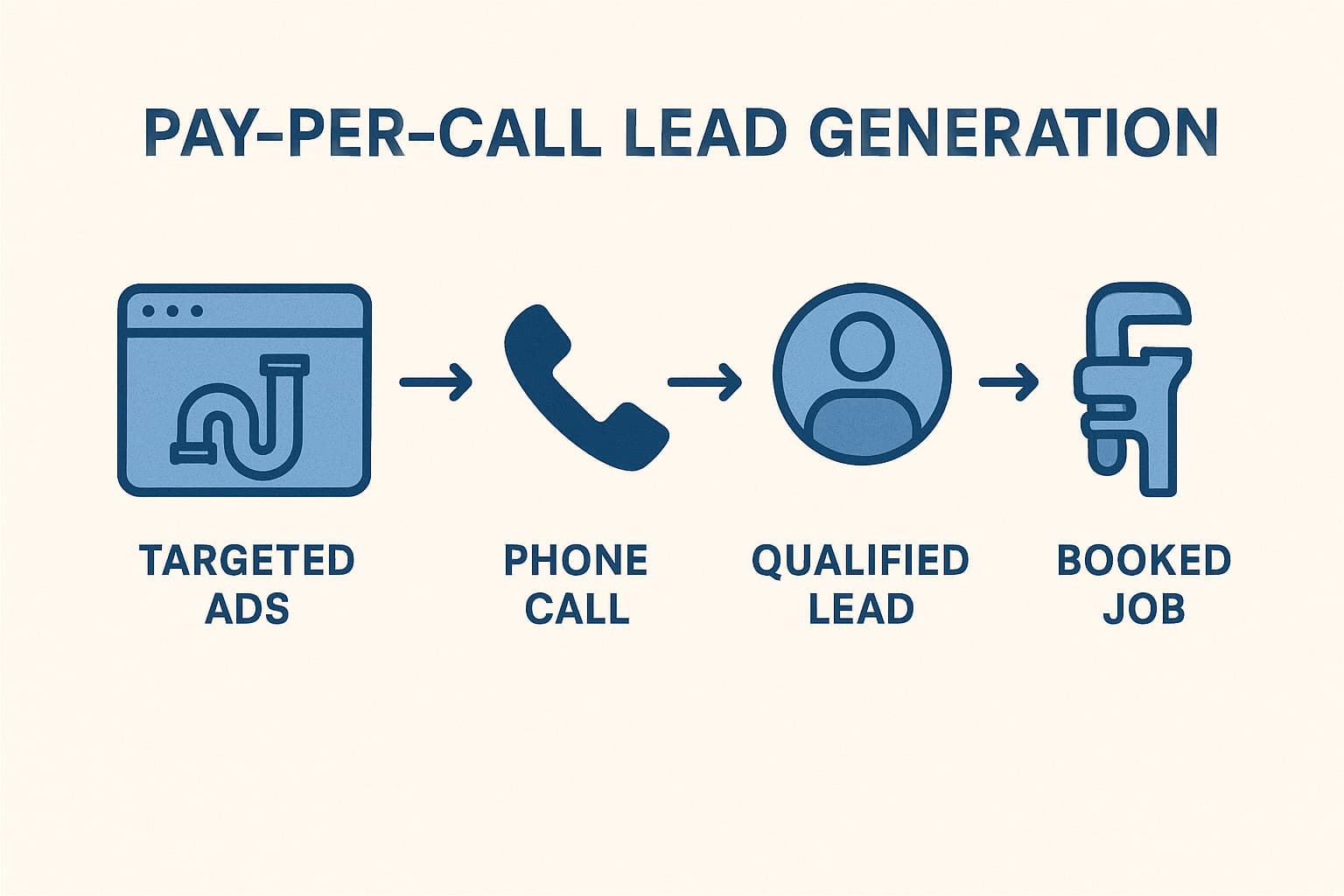
The process follows a structured chain:
- An advertiser (typically a service business) wants phone leads — potential customers calling their sales or support line.
- The advertiser partners with a pay per call network or platform that connects them with affiliates.
- You, as the affiliate, receive a unique trackable phone number assigned to your campaign.
- You promote that phone number through your content, ads, or landing pages.
- When someone dials the number, the call is routed to the advertiser's business through the tracking platform.
- If the call meets the qualifying criteria (minimum duration, caller location, first-time caller), the platform records it as a valid conversion.
- You earn a commission — often $5 to $200+ per qualified call depending on the industry.
What Makes a Call "Qualified"
Not every phone call earns a commission. Advertisers set specific qualification criteria to ensure they're paying for genuine, high-intent leads:
- Minimum call duration — the most common qualifier. Calls must last at least 60, 90, or 120 seconds to count. This filters out accidental calls, wrong numbers, and tire-kickers.
- Geographic targeting — many campaigns require callers to be from specific regions. A US-based insurance company only pays for calls from US-based callers.
- First-time callers — some campaigns only pay for new callers who haven't contacted the business before, preventing duplicate leads.
- Business hours — certain campaigns only count calls made during the advertiser's operating hours.
- IVR navigation — some campaigns use Interactive Voice Response menus where the caller must select a relevant option before being connected, confirming their intent.
How Call Tracking Technology Works
The technology behind pay per call is sophisticated but invisible to the caller:
- Unique tracking numbers — each affiliate receives a distinct phone number. When someone dials it, the tracking platform identifies which affiliate generated the call.
- Call routing — the platform routes the call to the advertiser's actual business line. The caller never knows they're going through a tracking system.
- Real-time attribution — the platform records call duration, caller location, time of call, and whether qualification criteria were met.
- Recording and quality monitoring — many platforms record calls (with legally required disclosures) to verify lead quality and resolve disputes.
Platforms like Invoca, Ringba, CallRail, Retreaver, and Phonexa provide this tracking infrastructure.
Why Pay Per Call Pays More Than Traditional Affiliate Models

The economics of pay per call explain why commissions are dramatically higher than standard cost-per-sale or cost-per-lead affiliate offers.
Phone Calls Signal the Highest Purchase Intent
Consider the difference in intent between someone clicking a banner ad and someone picking up their phone to call a business. The phone caller has already identified a problem, researched options at least partially, decided they want to speak with someone, and taken the active step of dialing.
This level of intent translates to conversion rates of 30-50% for phone calls versus 2-5% for web traffic. Businesses pay premium commissions for phone leads because those leads are far more likely to become paying customers.
High Customer Lifetime Value Justifies Big Payouts
Pay per call thrives in industries where customer lifetime value is high:
- Insurance — a single policy generates thousands in premiums over years. Businesses pay $20-$150 per qualified call.
- Legal services — a personal injury case can generate tens of thousands in fees. Firms pay $50-$200+ per qualified call.
- Home services — plumbing, HVAC, and roofing jobs average $500-$5,000+. Companies pay $15-$75 per qualified call.
- Healthcare — addiction treatment and dental services command $50-$200+ per call due to high treatment values.
- Financial services — debt relief, mortgage refinancing, and tax resolution pay $20-$100+ per qualified call.
The Math Compared to Traditional Affiliate Commissions
A typical e-commerce affiliate program pays 3-8% commission on a $50 product — that's $1.50-$4.00 per sale. A pay per call campaign in the insurance vertical might pay $75 for a single 90-second phone call. Fewer conversions needed, higher earnings per conversion, and a model that rewards quality over volume.
Best Industries and Niches for Pay Per Call Campaigns
Not every business benefits from phone leads. Pay per call works best where purchase decisions are complex, expensive, or require personal consultation.
Insurance: The Highest-Paying Vertical
Insurance is the flagship pay per call industry. Health insurance, auto insurance, life insurance, and Medicare supplement plans all generate premium payouts. Callers are comparing coverage options and need guidance from an agent. Policies represent significant recurring revenue for the insurer. Phone conversations are essential because insurance products are complex and personalized.
Legal Services: Premium Case Leads
Personal injury lawyers, DUI attorneys, workers' compensation firms, and family law practices all rely on phone consultations as their primary lead intake method. Potential clients need to describe their situation before the firm can evaluate the case. High-value cases justify extremely high acquisition costs.
Home Services: Consistent Local Demand
Plumbers, electricians, HVAC technicians, roofers, and pest control companies serve urgent local needs. Homeowners experiencing emergencies call immediately rather than filling out forms. Seasonal demand creates predictable traffic patterns that experienced affiliates capitalize on.
Healthcare and Addiction Treatment
Addiction treatment centers, mental health clinics, dental practices, and telehealth services all benefit from phone-based lead generation. Patients and their families often prefer calling to discuss sensitive health matters. Treatment programs have high lifetime values that justify premium acquisition costs.
Financial Services
Debt consolidation, tax relief, mortgage refinancing, and financial planning services all require phone conversations where consumers discuss their specific financial situation. The personal nature of financial decisions makes phone calls the natural conversion path.
Understanding which industries pay the most helps you focus your efforts on campaigns that generate the highest return per call — a core principle of effective digital marketing strategy applied to phone-based lead generation.
How to Generate Phone Calls as an Affiliate

Driving phone call traffic requires different strategies than driving web clicks. The goal is reaching people actively looking for a service who are ready to pick up the phone.
Search Engine Marketing (PPC)
Pay-per-click advertising on Google Ads and Bing Ads is the most direct way to generate phone calls:
- Click-to-call ads — Google Ads offers call extensions and call-only campaigns that display your tracking number directly in the ad. Users tap the number on mobile and call immediately.
- High-intent keyword targeting — bidding on keywords like "emergency plumber near me," "auto insurance quotes," or "personal injury lawyer free consultation" reaches people with immediate phone-call intent.
- Local targeting — geographically restrict your ads to areas served by the advertiser's business.
PPC for pay per call requires careful math — your ad spend per call must be lower than your commission per qualified call to maintain profitability.
Content Marketing and SEO
Organic content that ranks for high-intent service keywords generates free phone traffic:
- Blog posts — "How to Choose the Right Home Insurance in [State]" or "What to Do After a Car Accident" attract readers who may need to call a service provider.
- Landing pages — create optimized pages with clear calls to action featuring your tracking phone number prominently.
- Local SEO content — articles targeting "[service] in [city]" keywords reach people looking for local providers who prefer calling over filling out online forms.
Content marketing takes longer to produce results than PPC but generates ongoing phone traffic without ongoing ad spend.
Social Media Advertising
Facebook Ads and Instagram Ads with call-to-action buttons can generate phone leads effectively:
- Target audiences based on demographics, interests, and life events (recently moved, recently married, new homeowner) that correlate with needing specific services.
- Use lead-focused ad formats that make calling easy — include the phone number prominently in ad creative.
- Video ads explaining why someone should call build urgency and trust, especially for legal and healthcare verticals.
Offline and Hybrid Methods
Some pay per call affiliates use offline methods alongside digital:
- Direct mail — targeted postcards with the tracking phone number to specific demographics.
- Print advertising — local newspaper and magazine ads featuring the call-to-action number.
- Radio spots — local radio advertising mentioning the phone number.
These methods work particularly well for local service businesses where the target audience may not be actively searching online.
Getting Started With Pay Per Call Step by Step

If you're new to affiliate marketing through phone-based campaigns, here's a practical path to your first commissions.
Step 1: Choose a Pay Per Call Network
Join a platform that connects affiliates with pay per call advertisers. Ringba offers advanced call tracking and analytics popular with experienced affiliates. Invoca provides enterprise-grade call intelligence. Retreaver specializes in real-time call routing and attribution. Phonexa covers calls, leads, clicks, and email in one platform. MaxBounty and Aragon Advertising include pay per call offers alongside traditional CPA campaigns.
Step 2: Select Your First Campaign
Start with a single vertical and master it before diversifying. Choose an industry with strong payouts and consistent demand — insurance and home services are good starting verticals. Review the campaign's qualification criteria carefully, including minimum call duration, geographic requirements, and allowed promotional methods.
Step 3: Set Up Your Tracking
After campaign approval, generate your unique tracking phone numbers. Create separate numbers for different traffic sources (Google Ads, blog content, social media) so you can identify which channels generate the most qualified calls.
Step 4: Build Your Traffic Strategy
Choose one traffic generation method to start — PPC for fastest results, content marketing for long-term free traffic, or social media for audience-based targeting. Build landing pages or ad campaigns optimized for phone calls rather than clicks.
Step 5: Launch, Track, and Optimize
Start your campaign with a small budget if using paid traffic. Monitor which keywords, ads, and landing pages generate qualified calls versus short or unqualified ones. Optimize by increasing spend on what converts and cutting what doesn't.
Common Mistakes Beginners Make With Pay Per Call

Avoiding these errors saves money and accelerates your path to profitability.
Ignoring Call Duration Requirements
If a campaign requires 90-second minimum call duration and most of your generated calls last 45 seconds, you earn nothing despite driving real phone traffic. Ensure your content and ads attract callers with genuine intent who will stay on the line.
Not Tracking Traffic Sources Separately
Using the same tracking number across all channels makes it impossible to identify which traffic source generates profitable calls. Always use separate numbers for separate channels — Google Ads, blog content, Facebook Ads, and each landing page should have distinct tracking.
Choosing High-Payout Campaigns Without Considering Volume
A $200 per call campaign sounds attractive, but if the vertical is extremely competitive and you generate one qualified call per month, a $25 per call campaign generating 30 calls monthly earns far more. Balance payout size with realistic call volume expectations.
Neglecting Compliance and Regulations
Phone-based marketing has specific legal requirements — TCPA compliance in the US, Do Not Call registry restrictions, and call recording disclosure laws. Violating these regulations carries serious penalties. Understand the legal requirements for your target geography before launching campaigns.
Running Paid Ads Without Proper Math
PPC campaigns for pay per call require precise ROI tracking. If your average cost per call from Google Ads is $35 and your commission per qualified call is $40, your margin is razor-thin. Factor in the percentage of calls that don't qualify (wrong duration, wrong location) — your effective cost per qualified call may be much higher than your cost per total call.
Pay Per Call vs Traditional Affiliate Models: Key Differences
Understanding how pay per call compares to standard affiliate models helps you decide whether it fits your strategy and skills.
Conversion Event
Traditional affiliate marketing tracks online actions — purchases, signups, form submissions. Pay per call tracks phone calls. This fundamental difference changes everything about how you drive traffic and optimize campaigns.
Payout Levels
Traditional e-commerce affiliate commissions: $1-$50 per sale for most products. Pay per call commissions: $5-$200+ per qualified call. The higher payouts reflect the higher intent and conversion rates of phone-based leads.
Traffic Requirements
Traditional affiliate marketing often requires high traffic volumes because conversion rates are low. Pay per call can be profitable with much lower traffic because each qualified call has a high probability of converting into a customer for the advertiser.
Skill Requirements
Traditional affiliate marketing rewards content creation and SEO skills. Pay per call additionally rewards media buying skills (PPC management), landing page optimization for phone calls, and understanding caller psychology. The learning curve is steeper but the earning ceiling is higher.
Best Used Together
The smartest affiliates don't choose between models — they combine them. A blog about home improvement can earn traditional affiliate commissions from product recommendations while simultaneously generating pay per call revenue by connecting readers with local service providers. As you build expertise across both models, joining an established affiliate network that offers pay per call campaigns alongside traditional CPA and CPS offers gives you the flexibility to monetize your traffic through whichever model converts best for each specific audience segment and content type.
Conclusion
Pay per call affiliate marketing is one of the highest-paying performance models available because phone calls represent the strongest purchase intent a consumer can signal. Industries like insurance, legal services, home services, healthcare, and financial services pay $5-$200+ per qualified call — dramatically more than traditional affiliate commissions.
Success requires understanding call qualification criteria, choosing the right verticals, building traffic strategies optimized for phone calls rather than clicks, and tracking every metric to maintain profitability. Whether you generate calls through PPC advertising, SEO content, social media, or offline methods, the fundamentals remain the same: reach people with genuine intent, make calling easy, and let the advertiser's sales team close the deal.
Start with one vertical, one traffic source, and one campaign. Master the economics before scaling. Pay per call rewards precision over volume — and for affiliates willing to learn the model, it offers some of the most lucrative commissions in the entire affiliate industry.