
If you want to learn SEO in 2026, you're making one of the smartest career and business decisions available. Search engine optimization drives over 53% of all website traffic globally, and every business with an online presence — from local restaurants to multinational corporations — needs SEO expertise.
The good news: SEO is entirely learnable without a formal degree, expensive courses, or years of training. The best SEO professionals taught themselves through free resources, hands-on practice, and consistent experimentation. The bad news: the sheer volume of information available makes it overwhelming. Outdated advice mixes with current best practices. Contradictory opinions flood forums. Without a structured path, beginners waste months learning things that no longer matter.
This roadmap solves that problem. It lays out the exact sequence to learn SEO from zero to job-ready — covering what to study, which tools to master, where to practice, and how to build a portfolio that proves your skills. Many SEO skills also translate directly into earning income through affiliate programs, content monetization, and freelance services.
Understanding How Search Engines Work: The Foundation
Before learning tactics, you need to understand the system you're optimizing for. Every SEO decision makes more sense when you understand what Google is actually doing behind the scenes.
Crawling, Indexing, and Ranking
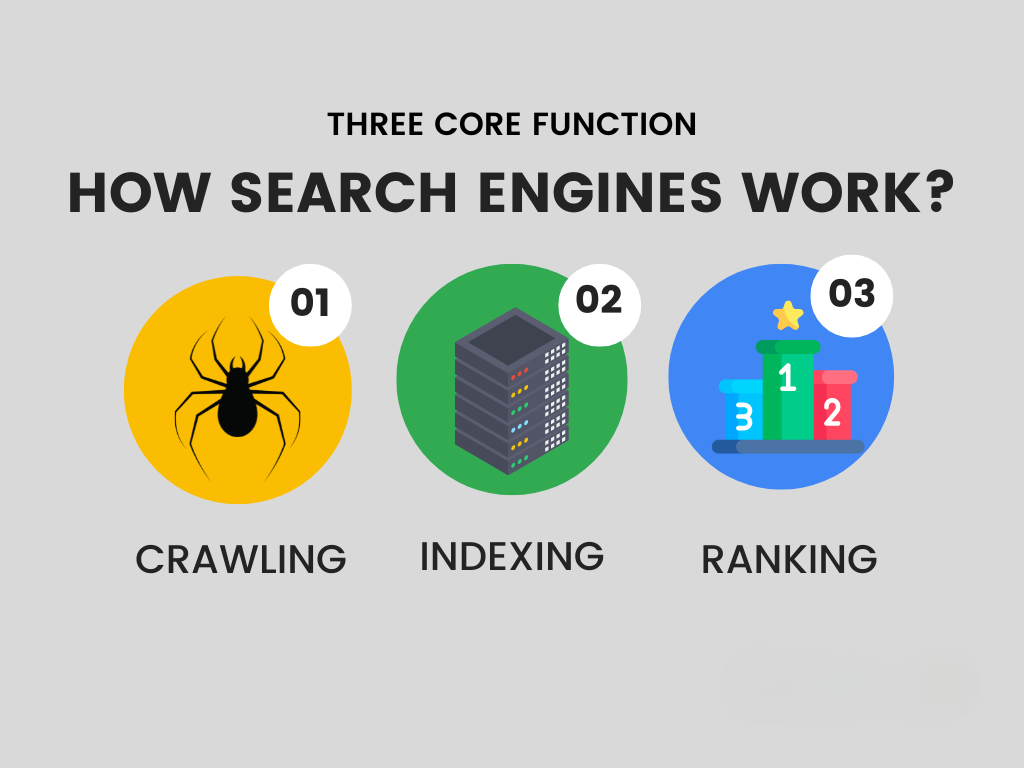
Google discovers web pages through automated crawlers (also called spiders or bots). The primary crawler is Googlebot, which follows links from page to page across the internet, discovering new content and revisiting existing pages for updates.
Once a page is crawled, Google processes and stores it in its index — a massive database of web pages. During indexing, Google analyzes the page's content, structure, metadata, and context to understand what it's about.
When someone searches a query, Google's algorithm pulls relevant pages from its index and ranks them based on hundreds of factors — relevance to the query, content quality, authority, user experience, and technical health.
Understanding this three-stage process (crawl → index → rank) helps you diagnose any SEO problem. If your pages aren't appearing at all, it's a crawling or indexing issue. If they appear but rank poorly, it's a content, authority, or technical issue.
Google's Ranking Factors and E-E-A-T
Google's algorithm uses hundreds of ranking signals, but the most important ones for beginners to understand include content relevance and quality, backlink authority, page experience (Core Web Vitals), mobile-friendliness, HTTPS security, and E-E-A-T (Experience, Expertise, Authoritativeness, Trustworthiness).
E-E-A-T isn't a direct ranking factor — it's a framework Google uses to evaluate content quality, especially for YMYL (Your Money or Your Life) topics like health, finance, and legal advice. Content demonstrating firsthand experience and genuine expertise ranks better than generic, surface-level articles.
Free Resources for Learning the Fundamentals
- Google Search Central — Google's own documentation on how search works, SEO best practices, and developer guidelines. This is the most authoritative free resource available.
- Google's SEO Starter Guide — a beginner-friendly guide published by Google itself, covering the fundamentals of making your site search-friendly.
- Moz Beginner's Guide to SEO — one of the most widely recommended free SEO courses, covering everything from keyword research to link building in an accessible format.
Mastering Keyword Research: The Skill That Drives Everything
Keyword research is the foundation of every SEO strategy. It tells you what your audience is searching for, how they phrase their questions, and how competitive each topic is to rank for.
Understanding Search Intent
Every search query has intent behind it — the reason someone typed those words into Google. Understanding intent is more important than understanding keywords themselves:
- Informational intent — the searcher wants to learn something. "What is SEO" or "how does keyword research work."
- Navigational intent — the searcher wants to find a specific website. "Ahrefs login" or "Google Search Console."
- Commercial investigation — the searcher is researching before buying. "Best SEO tools 2026" or "SEMrush vs Ahrefs."
- Transactional intent — the searcher is ready to take action. "Buy Ahrefs subscription" or "hire SEO freelancer."
Matching your content to the correct search intent is the single most important on-page SEO skill. A page targeting "best SEO tools" (commercial investigation) shouldn't read like a tutorial — it should be a comparison or listicle that helps the reader decide.
Free Keyword Research Tools for Beginners
You don't need premium subscriptions to start doing keyword research:
- Google Search Console — shows which queries already bring impressions and clicks to your site. The best source of real keyword data for sites you own.
- Google Autocomplete and People Also Ask — type any seed keyword into Google and study the suggestions. These reflect real searches real people make.
- Google Trends — validates whether a keyword's search interest is growing, stable, or declining.
- Ubersuggest (free tier) — provides keyword volume, difficulty scores, and content ideas with limited daily free searches.
- AnswerThePublic — visualizes questions and phrases people search around any topic.
How to Choose Keywords as a Beginner
Start with long-tail keywords — longer, more specific phrases with lower competition. "Best free keyword research tools for beginners" is far easier to rank for than "keyword research." Long-tail keywords also tend to have higher conversion intent because they're more specific.
Target keywords where you can genuinely create the best, most helpful content on the internet for that query. If the top-ranking pages are 10,000-word comprehensive guides from sites like Moz, Ahrefs, and HubSpot, that keyword might be too competitive for your first blog post.
Learning On-Page SEO: Optimizing What You Control
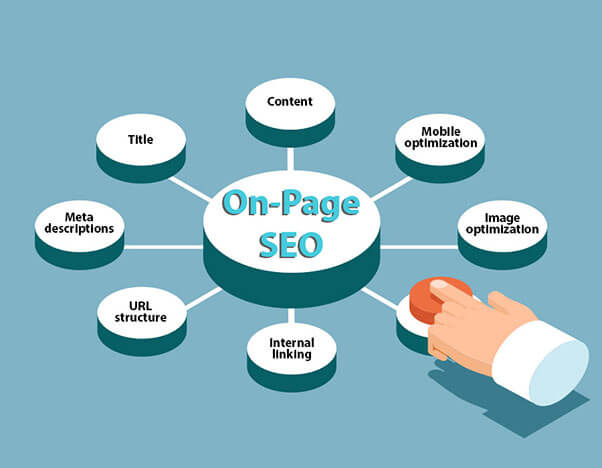
On-page SEO covers everything you do directly on your website and within individual pages to improve their search visibility. This is where beginners should focus first because the results are immediate and don't depend on external factors.
Title Tags and Meta Descriptions
- Title tags — the clickable headline appearing in search results. Include your primary keyword naturally, keep it under 60 characters, and make it compelling enough to earn clicks. The title tag has the single largest impact on click-through rate from search results.
- Meta descriptions — the snippet below the title in search results. Not a direct ranking factor, but a well-written meta description increases CTR, which indirectly supports rankings. Keep it under 155 characters and include a clear value proposition.
Header Structure and Content Optimization
Use a logical heading hierarchy: one H1 per page containing your primary keyword, H2s for major sections, and H3s for subsections. This structure helps both readers and search engines understand your content organization.
Within your content, include your target keyword in the first 100 words, once in an H2, and naturally throughout the body. Keyword density of 1–1.2% is a useful guideline, but natural readability always takes priority. Google's algorithms are sophisticated enough to understand synonyms and related terms — you don't need to repeat the exact keyword unnaturally.
Internal Linking Strategy
Internal links connect pages on your site, helping Google discover and understand relationships between your content. Link between related articles using descriptive anchor text (not "click here"). A well-structured internal linking system improves crawling efficiency, distributes page authority, and keeps visitors on your site longer.
Image Optimization
Compress images for fast loading, use descriptive file names (running-shoes-review.jpg instead of IMG_4521.jpg), and add alt text that describes the image content. Image optimization contributes to both page speed and accessibility — two factors Google values.
Understanding Off-Page SEO and Link Building
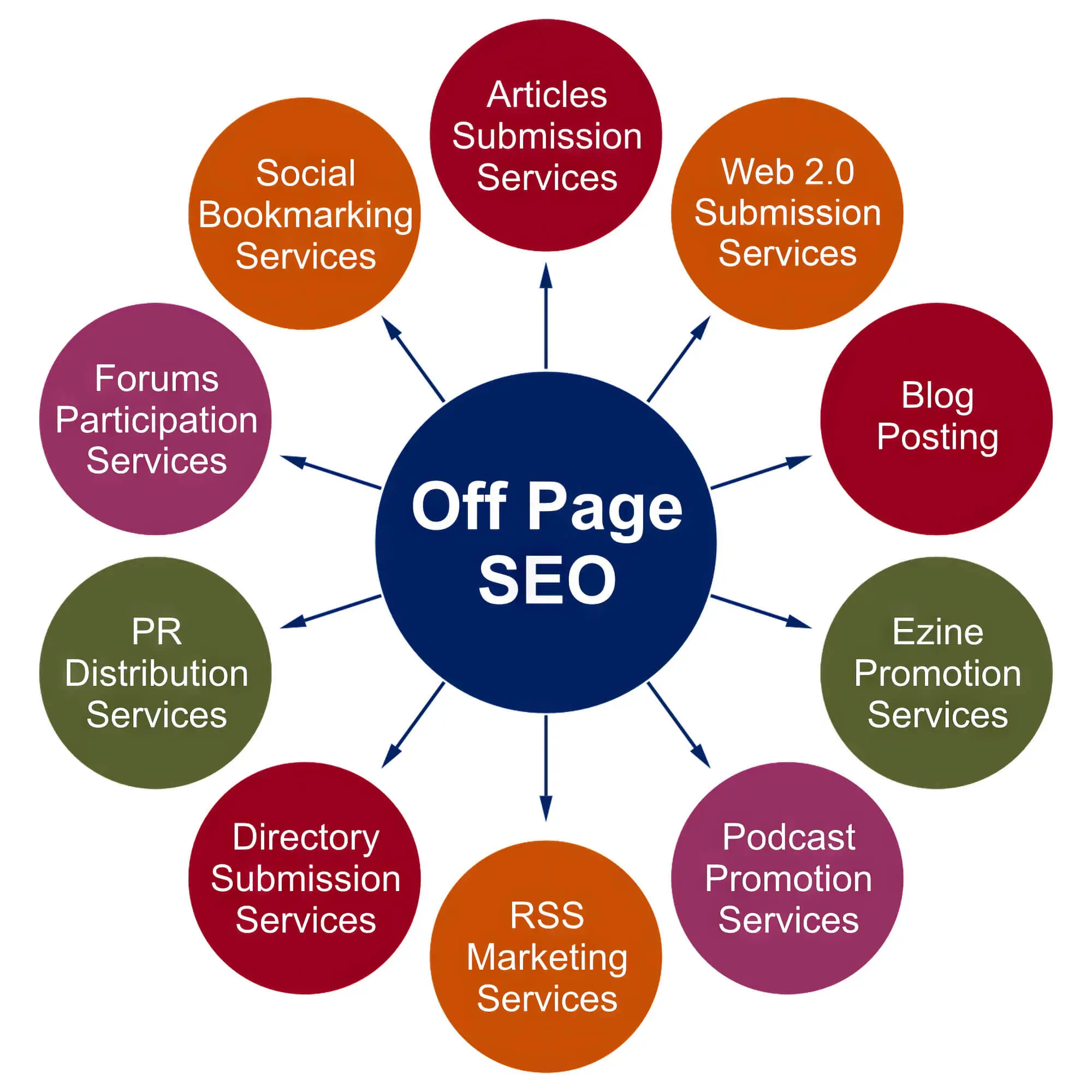
Off-page SEO covers everything happening outside your website that influences your rankings. The most important off-page factor is backlinks — links from other websites pointing to yours.
Why Backlinks Matter
Google treats backlinks as votes of confidence. A link from a reputable, high-authority site signals that your content is trustworthy and valuable. Pages with more high-quality backlinks consistently outrank pages with fewer or lower-quality links.
Not all backlinks are equal. A single link from a site like Forbes, HubSpot, or a respected industry publication carries far more weight than hundreds of links from low-quality directories or spam sites.
Ethical Link Building Strategies for Beginners
- Create linkable content — original research, comprehensive guides, data studies, infographics, and free tools naturally attract links because other sites reference them.
- Guest posting — write quality articles for other blogs in your niche with a link back to your site. Focus on relevant, reputable publications.
- Broken link building — find broken links on other websites and offer your content as a replacement. Tools like Ahrefs and Screaming Frog help identify broken link opportunities.
- Resource page outreach — find pages that list resources in your niche and suggest your content for inclusion.
What to Avoid: Black Hat SEO
Buying links, using private blog networks (PBNs), participating in link schemes, and other manipulative tactics violate Google's guidelines. Google's spam detection is sophisticated enough that these approaches carry serious risk — including manual penalties that can remove your site from search results entirely. Build links ethically from the start.
Learning Technical SEO: Making Your Site Search-Friendly
Technical SEO ensures search engines can efficiently crawl, index, and render your website. Even the best content won't rank if technical problems prevent Google from processing it.
Site Speed and Core Web Vitals
Google uses Core Web Vitals as ranking signals — measuring real-world user experience:
- Largest Contentful Paint (LCP) — measures loading performance. Target under 2.5 seconds.
- Interaction to Next Paint (INP) — measures responsiveness. Target under 200 milliseconds.
- Cumulative Layout Shift (CLS) — measures visual stability. Target under 0.1.
Use Google PageSpeed Insights and Chrome DevTools to diagnose speed issues. Common fixes include image compression, browser caching, code minification, and using a content delivery network (CDN).
Mobile-First Indexing
Google predominantly uses the mobile version of your site for ranking and indexing. If your site looks or performs poorly on mobile devices, your rankings suffer across all devices. Responsive design isn't optional — it's a baseline requirement.
Crawlability and Indexing
- XML sitemap — tells Google which pages exist on your site. Submit it through Google Search Console.
- Robots.txt — tells crawlers which pages to skip. Configure it carefully to avoid accidentally blocking important pages.
- Canonical tags — prevent duplicate content issues by specifying the preferred version of a page.
- HTTPS — secure sites rank better than non-secure ones. An SSL certificate is mandatory.
Structured Data and Schema Markup
Adding Schema.org markup helps Google understand your content's context. Product reviews, FAQs, how-to guides, and articles all have specific schema types that can earn rich snippets in search results — enhanced listings with star ratings, FAQ accordions, or step-by-step previews that increase click-through rates significantly.
Practicing SEO: Building Your Own Projects
Reading about SEO and actually doing SEO are completely different experiences. Hands-on practice is where real learning happens.
Start Your Own Website or Blog
The fastest way to learn SEO is by building your own site and optimizing it. Choose a niche you're interested in, set up a WordPress site (even on the free tier), and start publishing content optimized for real keywords.
Track your progress through Google Search Console — watch your impressions grow, your rankings improve, and your first organic clicks arrive. There's no substitute for this firsthand experience.
Use Free SEO Tools Daily
Build the habit of working with professional SEO tools:
- Google Search Console — your most important free tool. Shows queries, rankings, indexing status, and technical issues.
- Google Analytics (GA4) — tracks visitor behavior, traffic sources, and conversion paths.
- Screaming Frog (free for 500 URLs) — crawls your site to identify technical issues.
- Ahrefs Webmaster Tools — free site audit and backlink analysis for your own domains.
Audit Real Websites
Practice by auditing websites — your own, friends' sites, or local business sites (with permission). Check for title tag optimization, header structure, site speed, mobile-friendliness, broken links, and indexing issues. Document your findings and recommendations. These audits become portfolio pieces that demonstrate your skills to potential clients or employers.
Follow SEO News and Updates
Google's algorithm evolves constantly. Stay current through:
- Google Search Central Blog — official announcements about algorithm updates and best practices.
- Search Engine Journal and Search Engine Land — daily SEO news, analysis, and tutorials.
- John Mueller's communications — Google's Search Advocate regularly answers SEO questions and clarifies Google's position on various topics.
- YouTube channels — creators like Neil Patel and Brian Dean (Backlinko) publish SEO tutorials and strategy videos.
Monetizing Your SEO Skills: Career and Income Paths
Once you learn SEO well enough to produce results, multiple income paths open up. SEO is one of the most in-demand digital marketing skills, and the demand continues growing as businesses invest more in organic search visibility.
SEO Freelancing
Offer SEO services directly to businesses — keyword research, content optimization, technical audits, link building strategy, and monthly reporting. Freelance SEO specialists charge ₹15,000–₹50,000+ per client monthly in India, or $500–$3,000+ in Western markets. Even 2–3 clients provide meaningful income.
Platforms like Fiverr, Upwork, and LinkedIn help you find initial clients while you build a reputation.
SEO Career in Companies and Agencies
SEO specialists, managers, and strategists are hired by companies of all sizes. Entry-level SEO positions in India start at ₹3–₹5 lakhs annually, with experienced professionals earning ₹10–₹25 lakhs+. In the US, SEO specialists earn $50,000–$90,000+, with senior roles exceeding $120,000.
Building and Monetizing Your Own Websites
The SEO skills you develop can build websites that generate passive income through Google AdSense advertising, affiliate marketing product recommendations, sponsored content, and digital product sales. A niche blog ranking for buyer-intent keywords can earn consistent monthly income with minimal ongoing effort once established.
Consulting and Training
Experienced SEO professionals offer consulting services to businesses and training to aspiring marketers. SEO consulting rates range from ₹5,000–₹25,000 per hour in India, or $100–$500+ per hour in international markets.
As you build expertise and a portfolio, explore opportunities across established affiliate network platforms to monetize your SEO knowledge further — recommending tools like SEMrush, Ahrefs, and hosting providers to your audience through affiliate partnerships while helping them improve their own search visibility.
Conclusion
Learning SEO in 2026 follows a clear roadmap: understand how search engines work, master keyword research and search intent, optimize on-page elements, build quality backlinks ethically, ensure technical health, and practice relentlessly on real projects.
The entire learning path is accessible through free resources — Google Search Central, Moz's Beginner Guide, Google Search Console, and hands-on experimentation with your own website. You don't need expensive courses or certifications to start. You need consistency, curiosity, and willingness to practice.
SEO skills open doors to freelancing, full-time careers, passive income through content websites, and consulting opportunities. The demand for SEO expertise is growing alongside the businesses competing for online visibility.
Start today. Build a site. Publish your first optimized article. Track your first ranking. Every SEO professional began exactly where you are now — at the beginning, with a roadmap and the decision to follow it.